With its observations in the middle-infrared range, the James Webb Space Telescope (JWST) is going to revolutionise our understanding of the Universe. After a competitive selection, its first observing targets have been unveiled. Over the hundred or so programmes proposed by researchers form all over the world, only 13 have been selected. One of them will be led by a collaboration involving IAS researchers.
You are here
A multidisciplinary team involving researchers from the IAS, CSNSM and SOLEIL SMIS/beam line, has characterized in the laboratory the organic component from exceptional organic-rich interplanetary dust particles, i.e. Ultra-Carbonaceous MicroMeteorites (UCAMMs).
An international scientific team including two co-Investigators from the IAS has determined the elemental composition of the dust of 67P/Churyumov-Gerasimenko, the comet explored by the European space probe Rosetta. Their results reveal some of the most carbon-rich materials and the least altered ever explored. This cometary carbon is essentially in a macromolecular organic structure, meaning that it is mainly in that form that it was delivered by comets to the primitive Earth.
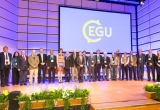
Yves Langevin, Research Director Emeritus of Outstanding Class, has been awarded the Runcorn-Florensky Medal from EGU (European Geosciences Union). This medal is awarded to scientists for their outstanding contribution to planetology. It has been given four times only over the past 15 years.
IAS is participating to the national open lab day "Fête de la Science" in the week of October 9th. After visits by high school students, the laboratory will be open for the general public on Sunday October 15th, from 2 to 6PM.