
The CoRoT team has released all the data produced by the mission. This is the result of several years of work, during which the team managed to interpret and filter the main artifacts produced by the instrument and the satellite, leaving a clean astrophysical signal, relevant for scientific analysis.
You are here
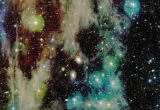
By combining multi-wavelength data obtained from space with Planck and WISE, and from the ground with MegaCam on the CFHT, a team of researchers has revealed the structure of the diffuse interstellar medium over several square degrees with unprecedented details. In particular, this study reveals the statistical properties of interstellar turbulence over a wide range of scales, from 0.01 to 10 pc.
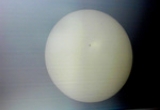
Monday, May 9, 2016, from 1:12 p.m. to 8:40 p.m. (local time), Mercury will transit in front of the Sun. It is a relatively rare event, especially if visible in its entirety, from beginning to end. The next transit of Mercury will take place in 2019, and the next to be visible in France in full will be held in 2039.
The IAS hosts on that occasion observations and presentations for laboratory staff, and the Orsay/Gif campus personnel.
From 1pm to 6pm :
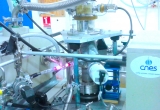
The MICMOC experiment that started in 2003 at IAS and whose goal is to understand the link between astrochemistry and astrobiology, just came across through a major and surprising result: the prebiotic formation of the sugar molecule ribose, a key molecule toward the formation of RNA, the nucleic acid containing the first genetic material of living beings.
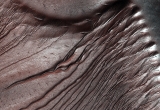
Gullies observed on Mars would be produced by the action of dry ice in winter and spring, not by liquid water flows as thought before. Indeed, recent numerical simulations show that under dry ice heated by the Sun, intense gas motions can destabilize and fluidize the soil, until they create flows similar to those created by a liquid.