
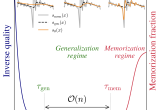
A study conducted by Tony Bonnaire (IAS, CNRS & Université Paris-Saclay) together with Raphaël Urfin and Giulio Biroli (ENS Paris, CNRS & PSL) and Marc Mézard (Bocconi University) sheds new light on a central question in generative AI research: how diffusion models — the key technology behind modern generative AI — manage to generalize efficiently before memorizing the data on which they are trained.
You are here
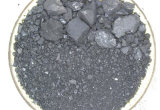
By analysing samples returned from the carbonaceous asteroids Ryugu and Bennu, an international team led by scientists at the Institut d’Astrophysique Spatiale (IAS – Univ. Paris-Saclay / CNRS) has identified a class of primordial objects that may have contributed to the formation and early evolution of the Solar System.
The AGE-PRO collaboration, bringing together astronomers from Europe, America, and Asia, has unveiled news constraints on the evolution of dust and gas in protoplanetary disks thanks to an ambitious ALMA program targeting 30 sources. Through combined analyses of dust thermal emission and gas spectral lines, it appears that the gas reservoir available to form giant planets evolves more slowly than the dust reservoir.
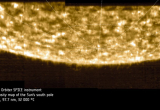
Thanks to its newly tilted orbit around the Sun, the ESA-led Solar Orbiter spacecraft is the first to image the Sun’s poles from outside the ecliptic plane. This unique viewing angle will change our understanding of the Sun’s magnetic field, the solar cycle and the workings of space weather.
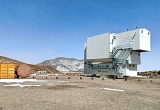
The Simons Observatory (SO has reached a significant milestone with the successful installation of its Large Aperture Telescope (LAT).