Work Plan
Our work plan bridges data analysis, physical modelling, sky modelling and component separation into an iterative process that will take advantage of the complementarities of expertise and data gathered in the MISTIC project. The project is broken into three Work Packages (WPs), each dedicated to one of the main aspects of our study:
✵ (WP1) data analysis and physical modelling of the Galactic astrophysics relevant to the emission and polarization at microwave frequencies,
✵ (WP2) specification and optimisation of the sky model to be used in component separation,
✵ (WP3) design and implementation of a new component separation method taking into account the sky model.
This last work package includes the analysis of the CMB E- and B-mode polarization maps and spectra resulting from our component separation.
Our model of the Galactic sky components, as well as the component separation algorithm, will be made publicly available at the end of the project, to be used by the CMB community, and astrophysicists and cosmologists working on CMB data.
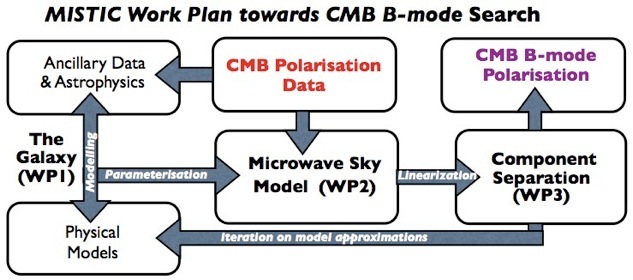
The MISTIC team has the ambition to lead the modelling of the Galactic foreground screens and, thereby, to uniquely contribute to bringing the detection of the primordial B-mode CMB polarization within reach. Better data is only a stepping-stone towards the detection of B-mode polarization from cosmic inflation. The first challenge, which is the main priority of the project teams, is to produce maps limited by detector noise, including the best control of instrument systematics, and atmosphere for ground-based and balloon experiments. Reducing residuals of the foregrounds screens within the detector noise is a second challenge, which is likely to be equally, or even more, difficult to reach.
Dust and synchrotron emission from the Galaxy are the dominant contributions to the microwave sky polarization. The physical processes which couple the field with matter and cosmic-rays on the one hand, and dust grains and their alignment with local physical conditions on the other hand, make the modelling of the Galactic polarization difficult. These physical couplings break the simplest assumption by which the spectral frequency dependence of the Galactic polarization and its angular structure on the sky are separable.
The Planck mission, balloon and ground based experiments, will provide a large gain in sensitivity at frequencies higher than 100 GHz where the dust emission is the dominant polarised emission. This emission needs to be separated from the CMB signal within an accuracy of 10% to reach the sensitivity limit of upcoming CMB experiments in the primordial B-mode search. To face this challenge, the MISTIC team proposes to develop a new approach where component separation is tied to the physical modelling of the dusty magnetized interstellar medium. In collaboration with Jean-Luc Starck (SAp, Saclay) we will work towards a component separation method that can be coupled to physical modelling of the Galactic foregrounds. With this new method, we will introduce the relevant physics of Galactic foregrounds into the mathematical formulating of the component separation.By achieving this goal, we will supersede existing separation methods which only use sky modelling, a posteriori, to estimate uncertainties and errors.
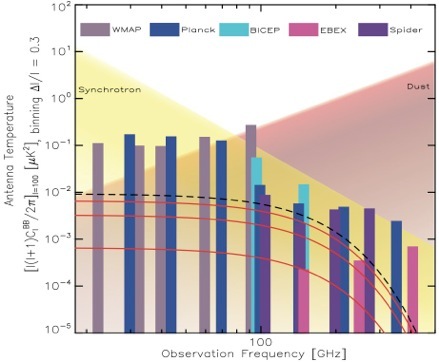
Sensitivity versus observation frequency for the CMB experiments: WMAP, Planck, BICEP, EBEX, and SPIDER at multipoles ℓ ~ 100 where the primordial B mode signal peaks. The dashed line represents polarization induced by gravitational lensing. The orange curves are primordial B modes for tensor to scalar ratios r = 0.01, 0.005, 0.001 (top to bottom).
Linking the astrophysics and mathematics of component separation
CMB polarisation bears information on the structure of the universe on large scales and the universe reionisation.
The CMB radiation propagates towards us along geodesic paths which are distorted in response to the curvature of space. Light rays are bent towards matter over-densities and away from matter under-densities in a way analogous to the effects of convex or concave optical lenses. Differential light deflection distorts the polarisation pattern of the CMB by solid-angle magnification and demagnification, thus leading to specific changes in the polarisation of the lensed compared to the unlensed CMB. After lensing, a primary CMB polarisation pattern of pure E-type exhibits B-type modes.
The epoch of reionisation is a largely unexplored frontier which motivates a range of observations. CMB polarisation on large angular scales complement observations of high redshift galaxies and redshifted H I in constraining physical scenarios. When did reionisation start? How long did it last? What is the nature of the ionising sources? Those questions remain essentially unanswered today. At the redshift of reionisation, additional CMB polarisation is generated on large angular scales, especially in the E-mode. But at the same time, the B-mode signal associated with primordial gravitational waves gains power, in the very same way the primary B-mode polarisation is generated.
Our component separation method will be used to quantify the E- and B-mode CMB polarisations with the aim at deducing as much cosmological information as possible. Firstly, we will exploit the refined results we will have obtained for the extraction of constraints on lensing and on reionisation from the polarisation data. Second, this will naturally lead us to search for the primordial B-mode signal associated with cosmic inflation. A positive measurement of the primordial signal would be an invaluable discovery, which would be compelling evidence that inflation took place, and would determine the energy scale of inflation. Significant upper limits would already allow us to exclude several classes of theoretically motivated inflationary models. We will concentrate our effort on the Planck data but the final analysis will include a cross-correlation between the BICEP2, EBEX and SPIDER experiments in collaboration with the instrument teams.
The impact of our project would be the highest, if we do detect the signatures of inflation on the B modes, but the signal may be too weak to be detected by the present generation of CMB experiments. This does not imply that our project bears high risks as to the content and significance of the work to be done, because the proposed research is required if the CMB community is going to extract the most out of the current generation of CMB polarisation experiments.
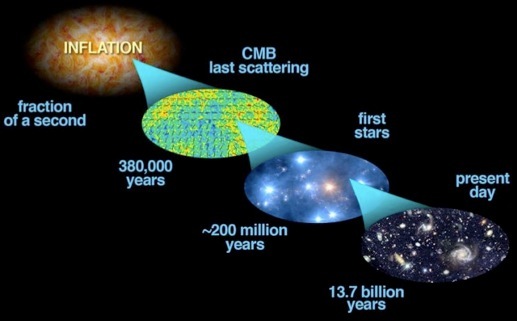
Stages in the evolution of the Universe. According to the cosmological standard model, inflation stretches microscopic quantum fluctuations into astronomical density fluctuations that leave an imprint on the cosmic microwave background (CMB), and then grow into the present day galaxy distribution. Figure borrowed from Bock et al. (2006, astro-ph/0604101).
Cosmology from CMB experiments
Scientific awareness of the Galactic magnetic field arose with the discovery of cosmic rays, and the polarization of dust reddened starlight. It was soon clear that the magnetic field and the cosmic-rays are dynamically tied to the interstellar gas. The importance of the magnetic field for star formation and interstellar matter energetics was quickly recognized, but more than 50 years later most questions remain quantitatively open due to the paucity of data on its small scale structure.
The high frequency Planck data and PILOT observations will provide the data we have been missing to continuously map the Galactic magnetic field orientation in the gaseous disk, and within interstellar clouds. While the dust polarization traces the magnetic field within the thin Galactic disk where matter is concentrated, the synchrotron polarization probes the field over the whole volume of the Galaxy, up to its halo. The comparison of the two emissions in polarization will provide new constraints on the 3D structure of the field to be added to existing models.
The Galactic magnetic field is commonly described as a vector sum of a regular and a random components. Our first goal is to complement existing models of the regular component. To fully describe the ordered field, we will face two open questions. What is the impact of nearby bubbles powered by massive stellar associations on the field structure? How is the field within the thin Galactic disk, where gas and star formation are concentrated, connected to the thicker disk and the Galactic halo? Our second goal will be to characterize the random component, which results from the dynamical interaction between the field and interstellar MHD turbulence, in particular by answering two outstanding questions: How is the power spectrum of the turbulent component related to that of the gas velocity field? What is the relation between field intensity and gas density in the diffuse interstellar medium?
We plan to combine the Planck and PILOT polarization data with gas spectroscopic, CO and HI,
observations to characterize the field correlation with interstellar turbulence, and the density structure of matter. This correlation analysis will also provide new information to make headway in our understanding of the nature of interstellar dust, and its evolution across interstellar space. Our interpretation of the data will be supported by statistical comparisons with MHD numerical simulations on scales of interstellar clouds, and of the full Solar Neighbourhood, including the disk-halo connection, through a collaboration with Patrick Hennebelle from Observatoire de Paris, and Miguel de Avillez from University of Evora.
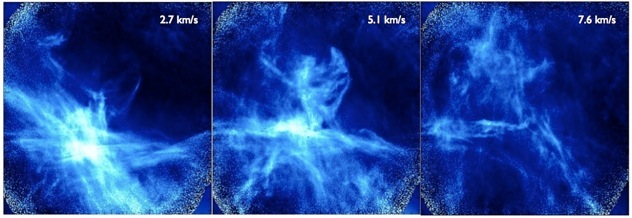
The Planck data will allow us to charecterize the role the magnetic field plays in shaping the diffuse interstelar medium. Its filamentray structure is illustrated here with HI spectroscopic observations obtained with the Dominion Radio Astrophysical Observatory. The three images correspond to three different velocity channels of one 4°x4° field (data from the Planck Deep Fields HI survey, PI Peter Martin).
The Galactic Magnetic Field
The Galactic interstellar medium (ISM) is dusty. Large dust grains (size > 10 nm) dominate the dust mass. Within the diffuse ISM, they are cold (~10-20 K) and emit a thermal in the Far-IR to millimeter wavelengths range (see our left figure). Dipolar emission from smaller dust particles is a main emission component at longer wavelengths. As stated by the polarization of starlight and of dust emission, large grains are non-spherical with their rotational axis efficiently aligned along the Galactic magnetic field lines.
Dust properties (size, temperature, emissivity) are found to vary from one line of sight to another among diffuse and dense clouds. These observations indicate that dust grains evolve through the interstellar medium. They can grow through the formation of refractory or ice mantles or by coagulation into aggregates in dense and quiescient regions. They can also be destroyed by fragmentation and erosion of their mantles under more violent conditions. Dust evolution modifies the optical properties of dust grains as well as the efficiency of the mechanism that tends to align their rotational axis them along the magnetic field lines.
The polarised emission of dust is therefore related to the grain properties (size, shape and magnetic susceptibility) and the efficiency of grain alignment, which both depend on local physical conditions (gas density, magnetic field orientation, radiation field) through evolution and alignment processes.
The present and upcoming microwave data will provide unprecedented constraints that will help model the polarization properties of dust grains. We aim at building a dust model for polarization which will answer two open questions :
✵ What is the spectral dependence of dust polarization at the wavelengths of CMB experiments?
✵ What is the impact of dust evolution within the diffuse interstellar medium – as traced by observed variations in the dust spectral energy distribution – on the polarization fraction and its spectral dependence?
The data analysis will constrain the grain alignment efficiency within the low to moderate cloud extinctions, characteristic of the diffuse interstellar medium at high Galactic latitude. It will allow us to determine the polarization fraction and its spectral dependence across the transitions from atomic to molecular gas, and from diffuse to translucent clouds (see our figure for an example of prediction obtained with the DUSTEM code). We will correlate our results with optical and near-IR polarization data, and with evidence for dust evolution (elemental depletions, extinction curve, dust emission). We will complement the Planck data with IRAS, Spitzer and Herschel photometry to get the full spectral energy distribution of the dust emission. These complementary observations will allow us to fully constrain the modelling and the data interpretation.
The interpretation of polarised data will provide new constraints on existing models of dust in the diffuse interstellar medium, and will probably require us to revise current paradigms. An important part of our work plan is focused on dust evolution, which contributes to breaking the separation between spatial and spectral dependence of the dust polarization. To quantify its impact on polarization, we will need to model how evolution changes the dust composition and structure, its optical properties as well as its alignment efficiency. We currently develop a numerical code to characterize dust evolution resulting from the competition between grain-grain coagulation, accretion and fragmentation in the turbulent ISM as a function of physical conditions. This evolutionary model will be coupled to the calculation of dust properties and alignment efficiency. We will fit emission and polarization observations of dust within a grid of models, which will be restricted to the parameter space of plausible scenarios of dust evolution.
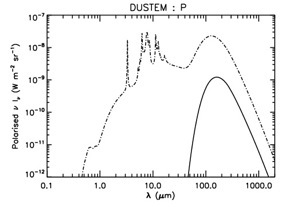
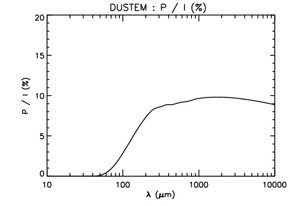
Dust total and polarized intensity spectral distributions (left) and the corresponding fraction of polarization (right) obtained with our updated version of the DUSTEM code, for the special case of the diffuse interstellar medium with the magnetic field assumed to be in the plane of the sky. The dust is composed of two populations, spheroïdal silicate grains (b/a = 1.5) and spherical amorphous carbon grains, with a size distribution and size-dependent alignment efficiencies that satisfy the standard diffuse extinction and polarization curves.
Dust Polarization
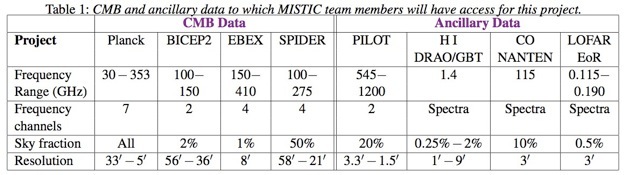
The MISTIC project relies on access to a comprehensive set of data including key proprietary ancillary observations through active collaborations. The team members are working with the Planck all-sky survey. Several of us contribute to the calibration, and the validation, of the polarization Planck survey. Some team members are also part of the BICEP2, EBEX and SPIDER collaborations. We will concentrate our effort on the Planck data, but our work plan also includes a cross-correlation of the Planck polarization data with results from the BICEP2, EBEX and SPIDER experiments, in collaboration with the instrument teams.
The cross-correlation of the Planck data with ancillary observations is an essential aspect of our work plan. We share these observations with scientists at other institutes. These collaborations include the capability to define new observing programs to follow-up results from our data analysis.

NANTEN2
PILOT
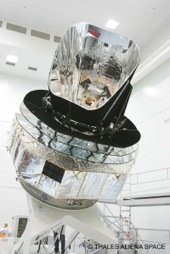
Planck
LOFAR
DRAO
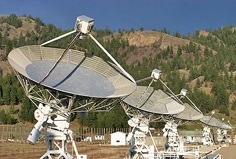
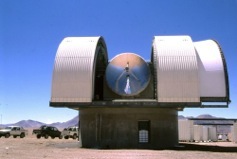
✵ Galactic HI observations carried out with the Green Bank Telescope and the Dominion Radio Astrophysical Observatory (DRAO), including the Planck deep fields observations (PI Peter Martin from CITA), and CO surveys carried with the NANTEN2 millimeter telescope from Nagoya University directed by Yasuo Fukui, are key ancillary data sets which will be of foremost importance in our characterization of the magnetic field structure and dust evolution.
✵ Our collaboration with the team of Antonio Mario Magalhaes from the University of Sao Paulo provides us with a data base of stellar polarization measurements, which will be essential for constraining the magnetic properties of interstellar dust.
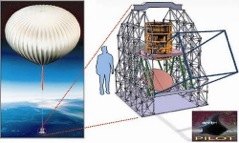
✵ The PILOT balloon-borne experiment will map the dust polarization at far-IR wavelengths, complementing the longer wavelengths data from Planck (PI Jean-Philippe Bernard).
✵ Our project includes the cross-correlation between CMB polarization and the LOFAR survey of redshifted H I from the Epoch of Reionisation (EoR) key project.
PILOT:
http://pilot.cesr.fr/PAGE_PILOT/index.html
Epoch of Reionisation (EoR) key project:
3
CMB data and ancillary observations